
Eagle River Bankruptcy Records
Eagle River bankruptcy records are federal court files maintained by the U.S. Bankruptcy Court for the District of Alaska. Eagle River is a community within the Municipality of Anchorage, so its residents file all Chapter 7, 11, 12, and 13 cases at the federal courthouse a short drive south on the Glenn Highway. You can search Eagle River bankruptcy records online through PACER, get basic case status by phone through McVCIS at no cost, or visit the clerk's office in person at 605 W. 4th Avenue in Anchorage. This page covers where to look, what tools to use, and where to get help in the area.
Eagle River Bankruptcy Overview
Where Eagle River Bankruptcy Cases Are Filed
Eagle River sits inside the Municipality of Anchorage, which puts it in the Third Judicial District. Every bankruptcy filing from this area goes to the same place: the U.S. Bankruptcy Court for the District of Alaska at 605 W. 4th Avenue, Suite 138, Anchorage, AK 99501. The clerk can be reached at (907) 271-2655. There is also an in-state toll free line at 1-800-859-8059. Office hours run Monday through Friday, 9:00 AM to 12:00 PM and 1:00 PM to 4:30 PM, closed on federal holidays.
Eagle River is close to downtown Anchorage. The drive from Eagle River to the federal courthouse takes roughly 20 to 30 minutes depending on traffic on the Glenn Highway. That access makes in-person filing or a courthouse visit easier for Eagle River residents than for people in more remote parts of the state. Still, most filers complete the entire process remotely using the court's Electronic Self-Representation (eSR) tool, PACER, or through an attorney.
The Municipality of Anchorage covers Eagle River as part of its Anchorage-wide government. Local services, property records, and municipal code matters go through the Municipality of Anchorage. But all bankruptcy filings remain in the federal system, separate from any city or borough office. The Anchorage Superior and District Court at 825 W. 4th Avenue handles state civil and criminal cases. It does not touch bankruptcy.
The Municipality of Anchorage Eagle River site is the place for local municipal records requests under the Alaska Public Records Act at AS 40.25. Those requests go to the municipal clerk, not the federal court.
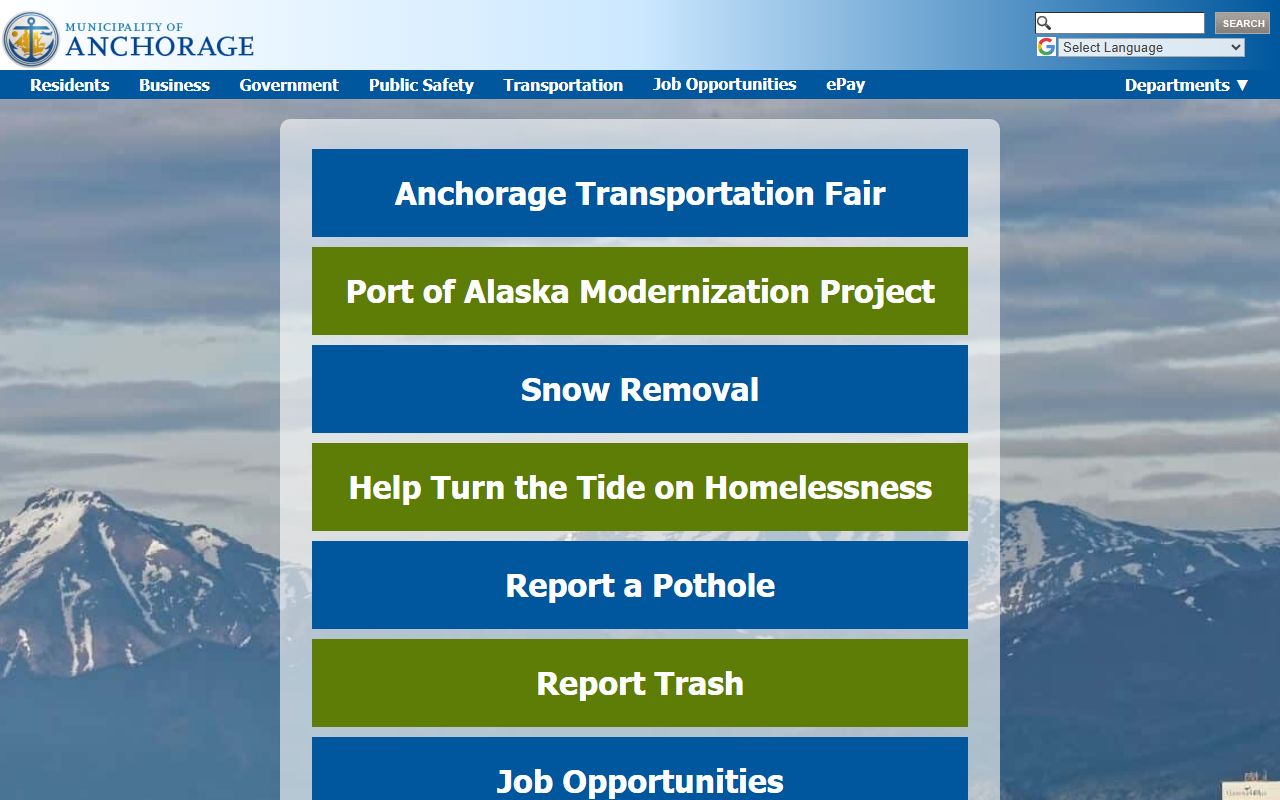
The Municipality of Anchorage website covers Eagle River community services, tax records, and public information requests relevant to residents dealing with bankruptcy-related local matters.
Note: Eagle River is part of the Municipality of Anchorage, so local government services go through the municipal offices, but all bankruptcy case filings go to the federal court in downtown Anchorage.
Search Eagle River Bankruptcy Records Online
PACER is the primary way to find Eagle River bankruptcy records online. The system gives you access to dockets, case summaries, and filed documents for every federal court in the country. Set up a free account at pacer.uscourts.gov. Each page you view costs $0.10, with a cap of 30 pages per document. If your total charges for a given quarter stay under $30, the fee is waived. The Alaska-specific PACER details are at akb.uscourts.gov/pacer.
PACER covers cases filed since January 2000. You can search by debtor name, case number, or Social Security number. Results include the docket sheet, filed documents, hearing dates, and trustee information. If you are unsure whether a case is in Alaska or another state, use the PACER Case Locator to scan all federal courts at once.
McVCIS is the free phone alternative. Call 1-866-222-8029 toll free or the local Anchorage number at (907) 271-2658. The system is live 24 hours a day. It gives you debtor name, case number, trustee name, and current status. You can search by name or case number with no account needed. It is a quick check before committing to PACER charges.
For cases filed before 2000, you need to contact the National Archives. The Federal Records Center in Seattle holds older files. You will need the case number from the Anchorage clerk before you can submit a request to NARA. Retrieval starts at $70 per box and takes around four weeks.
Note: Cases filed since January 2000 are also viewable at no cost on public terminals inside the clerk's office at 605 W. 4th Avenue in Anchorage, which is accessible to Eagle River residents within a short commute.
Anchorage Superior Court and State Records
The Anchorage Superior Court is at 825 W. 4th Avenue, Anchorage, AK 99501. It handles state civil and criminal cases for the entire Third Judicial District, which includes Eagle River and the broader Anchorage area. This court has no role in bankruptcy cases, which are federal. But it is the right place to look for related civil judgments, liens, and lawsuits that sometimes appear inside a bankruptcy filing. State court case records are searchable through the CourtView public access tool at records.courts.alaska.gov.
CourtView is free to use. You can search by name or case number. Results cover most case types back to 1990, though very old records live on paper at the courthouse. CourtView is not a bankruptcy tool, but if you are trying to build a full picture of someone's debt or legal history, it helps fill in the state court side. The Alaska Court System website also has forms, directories, and self-help pages.
For blank bankruptcy forms, go to the federal court site at akb.uscourts.gov. State court does not supply federal bankruptcy forms. Both systems serve Eagle River residents, but for entirely different purposes.
Alaska Bankruptcy Exemptions for Eagle River Residents
Eagle River filers can choose between Alaska state exemptions and the federal exemption set. Most people pick the Alaska set because the homestead amount is higher. Under Alaska Statute AS 09.38.010 through AS 09.38.510, the homestead exemption is $72,900. The federal homestead tops out at $31,575. To use Alaska's exemptions, you must have lived in the state for at least 730 days before filing, per 11 U.S.C. § 522(b)(3). Eagle River is part of Anchorage, so longtime residents generally qualify without issue.
Other Alaska exemptions that apply to Eagle River filers include:
- Motor vehicle: $4,050
- Household goods, clothing, and books: $4,050
- Tools of the trade: $3,780
- Permanent Fund Dividend: $1,500 per person
- No wildcard exemption under Alaska law
Venue for filing in Alaska requires at least 180 days of residency under 28 U.S.C. § 1408. If you moved to Eagle River recently from another state, check the 730-day rule carefully before choosing Alaska exemptions. For the Alaska Trust Act at AS 34.40.110, which lets self-settled trusts hold assets with some creditor protection, you would want an attorney's help since the rules are complex. Fraudulent transfers have a four year look back under Alaska law.
Required Credit Counseling Before You File
Every individual who files bankruptcy must complete a credit counseling course before submitting the petition. The requirement is in 11 U.S.C. § 109(h). You must finish the class within 180 days before you file. The course runs one to two hours and costs between $10 and $50. Fee waivers are available if your income is low. Keep the completion certificate. You have to attach it to your bankruptcy paperwork or the case will not proceed.
After your debts are discharged, a second class is required: the pre-discharge debtor education course. It covers personal financial management and runs about two hours. Costs range from $50 to $100. Like the first course, only agencies approved by the U.S. Trustee can provide it for Alaska filers. The current list is at justice.gov. Alaska falls under Region 18. Most approved providers offer online and phone delivery, which works well for Eagle River residents who prefer not to travel.
Legal Help for Eagle River Residents
Alaska Legal Services Corporation provides free civil legal help to low income Alaskans. The main Anchorage office is at 1016 West Sixth Avenue, Suite 200, Anchorage, AK 99501. Phone is (907) 272-9431. Toll free intake is 1-888-478-2572. ALSC offers a free bankruptcy class in Anchorage that teaches how to file your own Chapter 7 paperwork. It is by appointment only. Call (907) 452-5181 to schedule. Eagle River is close enough to the Anchorage office to make in-person help practical. Visit alsc-law.org for intake rules and income limits.
The Alaska Bar Association Lawyer Referral Service connects residents with licensed bankruptcy attorneys. The number is (907) 272-0352 or 1-800-770-9999. Details are at alaskabar.org. The first half hour of consultation is capped at $125. After that, fees are set by the attorney. The bar lists lawyers by area of law, including bankruptcy, consumer debt, and real estate matters that often come up during a filing.
Alaska Free Legal Answers is a free online legal clinic at alaska.freelegalanswers.org. Low income users can ask up to three civil legal questions per year. Licensed Alaska lawyers answer within a few business days. Bankruptcy, housing, and consumer debt questions are all accepted. You do not need to travel to use it.
The U.S. Trustee Program for Alaska operates under Region 18, headquartered in Seattle. The acting U.S. Trustee is Jonas V. Anderson. The trustee office oversees 341 meetings of creditors, reviews cases for fraud, and handles panel trustee appointments. Most 341 meetings for Chapter 7, 12, and 13 cases now run by Zoom. You get the video link in the notice after you file. More at justice.gov/ust/ust-regions-r18.
Nearby Alaska Cities
Eagle River is part of the Anchorage metro area. Other Alaska cities with their own bankruptcy records pages include: